

About the Weather

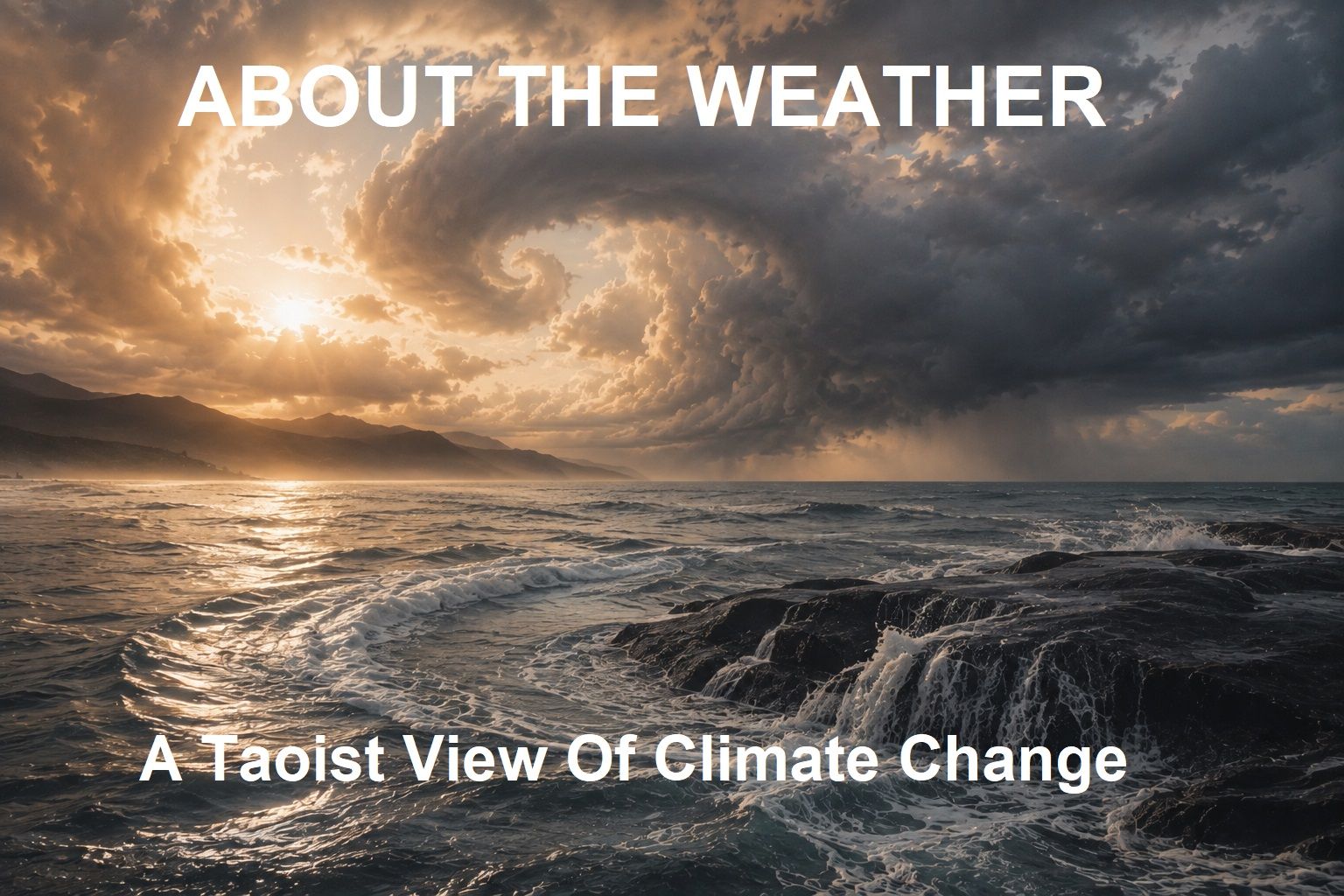
Discussing the weather is no longer the substance of small talk. It has become headline news.
We all inhabit it. We all breathe it. We all feel it on our skin. We don't usually think of ourselves as part of the weather—but we are.
Calling the recent extremes in weather ‘Climate Change’ can make it seem like something is happening outside of us. We debate its causes as though we are observers standing apart from it, when in fact we are immersed in the same system.
The boundary between ourselves and the environment is less solid than we imagine—a connection lost when discussing only numbers, graphs, and weather drama.
So, let’s talk about the human body.
One With the Whole
When the body grows too warm, it doesn't just sit there and accept the temperature—it responds. Blood moves closer to the skin. Moisture erupts, and through sweating or evaporation, heat is released. This happens without any conscious effort on our part.
Now, imagine placing your hand against the membrane of another living thing. Beneath your palm, there is movement you cannot see: energy circulating, moisture moving through mass, heat rising and dissipating. The body is not still. It is constantly exchanging itself with everything around it.
The body I am referring to is the Earth.
We think of the Earth as a collection of separate systems, but it is actually something closer to an organism—an immense fabric of air, water, soil and life, continually exchanging energy and matter across its membranes.
The human body is a collection of systems that respond to changes in the atmosphere. When the surrounding air grows cold, we shiver. When we are hot, we sweat. This is because we are also part of the Earth’s membrane.
We don’t consciously widen our blood vessels to move warm blood closer to the surface of the skin. Yet, the heat is drawn from our body and into the surrounding air.
We don’t orchestrate shivering, or how the muscles rapidly contract and relax to generate heat when our core body temperature drops. Our skin doesn’t shield us from the cold in the surrounding atmosphere—the surrounding air changes our internal temperature.
Individual cells don't understand what the whole body is doing. Yet an enormous amount of local interactions produce something that looks like coordinated regulation across separate systems.
The Unbroken Connection
The Earth does this at immense scale. Its oceans, atmosphere, forests, soils, ice and rivers form interconnected membranes through which energy and matter continually pass.
Air touches water. Water touches land. Sunlight touches ocean. Clouds form through evaporation and return as rain. Rivers carry minerals toward the sea. Plants draw carbon from the atmosphere and return oxygen. Heat moves from one place to another, never really belonging to any one part of the planet.
We only divided the Earth’s activities when we gave them names—but nature does not recognize boundaries. We are intrinsically connected to a membrane that moves through us.
“Humanity follows Earth.
Earth follows Heaven.
Heaven follows Tao.
Tao follows what is natural.”
The atmosphere is not simply sitting above the ocean. The sky, ocean and land are in constant conversation, breathing and exchanging heat and moisture.
As warm water gathers, air rises and the changing pressure systems create wind. Clouds organize into storms that redistribute heat and return the optimal temperature to sustain life.
A hurricane is an enormous engine powered by heat and moisture. But there is nothing mysterious in watching the ocean release its accumulating heat. Like a body that is sweating, the Earth transforms invisible warmth into rain and movement.
Storms churn the upper layers of the sea, bringing cooler water toward the surface. The drop in barometric pressure affects our sinuses. It disrupts the balance of air pressure between sinus cavities and the surrounding environment.
The Taoist has long recognized that no boundaries separate us from all that exists around us.
Doing Nothing, Nothing is Undone
Just as we don’t consciously decide to sweat, there is no mind directing how the Earth and our body are regulating temperature. Both respond to accumulating heat, and both are controlled by something that resembles natural intelligence: a move toward balance.
Perhaps this is one reason Climate Change can feel so abstract to us. We see rising temperatures as a number rather than as a change occurring inside a vast interconnected body.
A warm ocean creates evaporation, which create clouds that decrease the sunlight and reduce heat. Temperature changes across the tapestry create weather fronts and swirling wind as this great body cools itself.
This is where the human story becomes more than an argument over who is to blame. We are not standing outside this system damaging it from a distance.
We are inside of it.
The carbon dioxide released from a car does not remain a human problem. It becomes part of the atmosphere.
The greenhouse gases released by industry become part of the same atmospheric membrane through which every forest, bird, whale and human breathes.
These are not the exhalations of organic creatures that might be circulated through natural systems. Yet nature has always developed ways of exchanging, absorbing and transforming the substances that move through it.
While its systems evolved intricate ways to exchange and rebalance materials within their own rhythms—we have altered the rate and volume of this exchange.
Wastewater flowing from a city eventually becomes part of a watershed. Fertilizer running from a field becomes chemistry in a river, then an estuary, and eventually disrupting sea life in the reefs.
The things we produce do not disappear when they leave our hands. They travel. They circulate. They become something else.
There is no boundary between our waste and nature's body.
And so, the question becomes less about what nature is doing, and more about whether we can learn to participate in the exchange without overwhelming it.
Perhaps that is the more important message of Climate Change.
Not that we are destroying nature.
But that we are changing the conditions of a system we are part of.
When storms appear, the planet is simply moving heat somewhere else. We feel the effects of these storms, but this is not the Earth becoming angry. It is the Earth moving energy, and changing an atmosphere that we co-create.
Perhaps the most profound thing about the atmosphere is how incredibly thin it is.
From space, the enormous world beneath us is wrapped in what looks like an almost imperceptible veil.
That thin membrane contains the chemistry that makes life possible. It regulates temperature. It carries water. It moves heat.
It protects us from the violence of space.
And we have spent the last few centuries changing its composition. Not because humanity is evil. We did what living things do. We sought warmth and transportation. We sought food, shelter, electricity, comfort and abundance.
We discovered extraordinary ways to extract energy from the world around us.
But every action became part of the larger circulation.
And now the fabric is responding.
Not morally.
Not politically.
But naturally.
There Is No Outside
It is tempting to frame Climate Change as a battle between humanity and nature. But that framing may itself be part of the problem.
Because humanity is part of nature.
The same carbon that moves through a forest moves through our bodies. The same water that falls as snow on a mountain eventually enters a river, a reservoir, a field, and our glass.
The oxygen produced by ancient biological processes became the atmosphere in which our ancestors evolved.
We are not visitors here. We are another expression of the same planetary process.
That realization does not make our actions less important.
It makes them more meaningful.
If the atmosphere is a membrane, then what passes through us eventually passes into it. Maybe this is why the most useful response to Climate Change isn't fear. It is awareness.
Not the awareness that says, “Look what we have done.”
But: “Look where we are.”
We are inside the atmosphere. Inside the watershed. Inside the food chain. Inside the climate.
Inside the circulation.
The Earth does not need us to feel guilty for being human.
It needs us to understand that we are participants and it continually transforms what we give it.
And maybe, when we see how the effects of a warming Earth can lead to catastrophes, we don't have to understand it as punishment. It is not something happening outside of our control.
It is something more familiar. A body. Moving. Breathing. Circulating. Sweating and releasing heat… ensuring wellness and balance across the entire membrane.